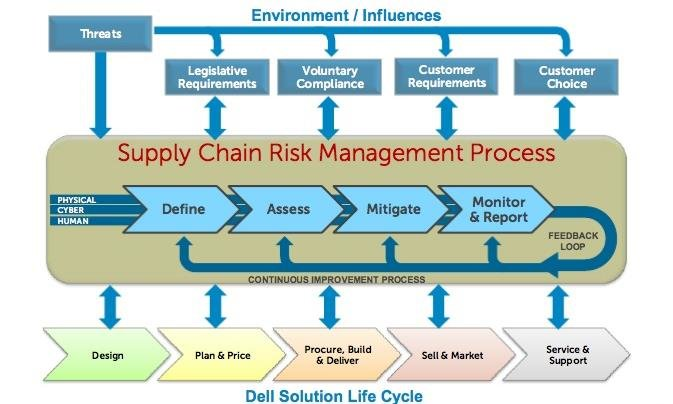
Resilience in supply chains refers to the ability to resist, absorb, and recover from or adapt to adverse events. According to a 2021 McKinsey survey, 93% of supply chain leaders reported they plan to increase resilience across their supply chains. This shift is driven by a stark reality: the World Economic Forum estimates that significant supply chain disruptions reduce the affected company's share price by 7% on average.
"The old model of supply chains optimized purely for cost and efficiency is dead," asserts Dr. Yossi Sheffi, Director of the MIT Center for Transportation and Logistics. "Today's supply chains must be designed for resilience first, with efficiency as a secondary consideration."
Visibility and Transparency: The foundation of a resilient supply chain is end-to-end visibility. Advanced technologies like Internet of Things (IoT) sensors, blockchain, and AI-powered analytics are enabling companies to track goods and monitor conditions in real-time across their entire network.
Walmart's Food Traceability Initiative In 2018, Walmart partnered with IBM to implement a blockchain-based system for tracing the origin of food products. The system reduced the time to trace mangoes from farm to store from 7 days to 2.2 seconds, enabling swift responses to potential contamination issues.
Diversification and Redundancy: The pandemic exposed the risks of over-reliance on single sources or regions. Companies are now actively diversifying their supplier base and building redundancies into their networks.
"Redundancy used to be seen as inefficient. Now it's recognized as a crucial insurance policy," says Jane Livesey, CEO of Cognizant ANZ.
Apple's Supplier Diversification Apple has been gradually shifting production away from China, investing in suppliers in countries like India, Vietnam, and Malaysia. This strategy helped the company navigate both US-China trade tensions and pandemic-related disruptions.
Flexibility and Agility: Resilient supply chains are designed to quickly adapt to changing circumstances. This involves flexible manufacturing capabilities, adaptable logistics networks, and agile decision-making processes supported by real-time data.
The sportswear company Nike exemplifies this approach. Its flexible manufacturing network and advanced demand-sensing capabilities allowed it to quickly shift production and inventory to meet changing consumer demands during the pandemic, resulting in a 9% revenue growth in fiscal year 2021 despite widespread retail closures.
Risk Assessment and Scenario Planning: Proactive risk management is critical for building resilience. Companies are increasingly using advanced analytics and AI to model various scenarios and develop contingency plans. Cisco's Supply Chain Risk Management Cisco's Value Chain Risk Management program uses AI to continuously monitor and assess over 40,000 data sources for potential supply chain risks. This system allowed Cisco to anticipate and mitigate the impact of over 100 disruptive events in 2020 alone.
While the benefits of resilience are clear, implementation comes with challenges. A 2022 Gartner survey found that 68% of supply chain leaders cited lack of budget as a major obstacle to building resilience.
However, the opportunities are significant. McKinsey estimates that companies could expect to lose more than 40% of a year's profits every decade due to supply chain disruptions. Investments in resilience can dramatically reduce this risk while also opening new avenues for competitive advantage.
"Companies that master supply chain resilience will not only be better protected against disruptions, but will also be able to recover faster and even gain market share when crises hit," notes Dr. Sheffi.
• Prioritize resilience in strategic planning: Supply chain resilience should be a board-level priority, integrated into overall business strategy.
• Invest in technology: Advanced technologies are key enablers of resilience. Prioritize investments in areas like IoT, blockchain, and AI-powered analytics.
• Foster a culture of agility: Building resilient supply chains requires a mindset shift across the organization. Encourage flexibility, continuous learning, and rapid decision-making.
• Collaborate across the ecosystem: Resilience can't be achieved in isolation. Foster deep collaboration with suppliers, customers, and even competitors to build industry-wide resilience.
• Balance efficiency and resilience: While resilience is crucial, it shouldn't come at the cost of all efficiency. Strive for an optimal balance that aligns with your business strategy and risk tolerance.
As we move into an era of increased volatility and uncertainty, supply chain resilience will become an even more critical differentiator. The World Economic Forum predicts that by 2025, 80% of companies will have digitized their supplier and customer relationships, enabling real-time responsiveness.
Moreover, resilience is increasingly intertwined with sustainability. As climate-related disruptions become more frequent, companies that build environmentally sustainable and resilient supply chains will be best positioned to thrive.
Supply chain resilience is no longer just about risk mitigation—it's about creating a powerful source of competitive advantage. By embracing this new paradigm, businesses can not only survive in an unpredictable world but turn disruption into opportunity. The companies that act now to forge these unbreakable links in their supply chains will be the ones leading their industries in the years to come.